
DANCE STYLES EXPLAINED
Ballroom & Latin dancing - what is it?

The Ballroom dances
-
Written by Emma.
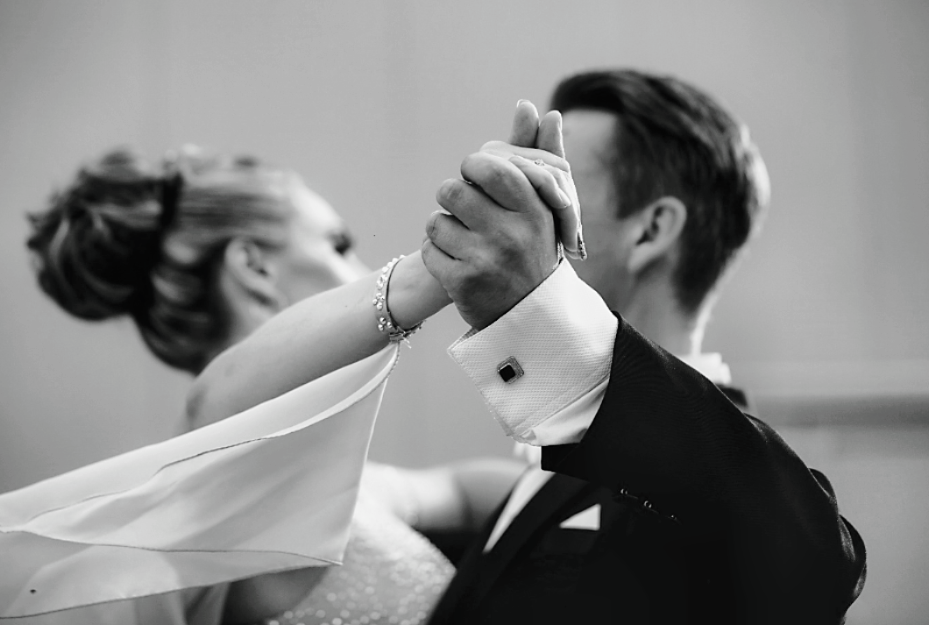
Ballroom dancing is a style of partner dancing. The collection of dances which are classed as ‘ballroom dances’ are those which were developed to be danced in a formal ballroom.
There are two main styles of ballroom dancing taught worldwide: the International Style and the American Style.
International Style, also known as the English Style or Standard, is recognised throughout Europe, Asia, and other parts of the world. It comprises five dances: Slow Waltz, Tango, Viennese Waltz, Slow Foxtrot, and Quickstep.
American Style, also known as American Smooth, is recognised in America, although some teachers also offer instruction in the International Style. The American Style includes four dances: Waltz, Tango, Viennese Waltz, and Foxtrot. The American Smooth syllabus allows dancers to incorporate solo positions and underarm turns.
We teach International Style Ballroom. The roots of these dances date back hundreds of years, but the modern versions were developed in Europe in the 1920s-1930s. We also include some Charleston in our Ballroom classes, as it’s fun to learn and occurs a little in the Quickstep! Each of the Ballroom dances has its own distinctive style and music.
-
Written by Emma.
We teach two styles of the Foxtrot in our ballroom classes: Slow Foxtrot and Social Foxtrot (also called the Rhythm Foxtrot). The Slow Foxtrot is a progressive dance. It has a smooth, flowing, progressive movement that glides across the floor with exquisite elegance and class, and is often considered one of the more challenging Ballroom dances due to the body control required to dance it well - but it is great fun to learn! The Social Foxtrot, while progressive, is a much more compact dance that's ideal for crowded floors. Its simplicity encourages you to chat to your dance partner while dancing at social events, and, as it can be danced to any music with four beats per bar, it is incredibly versatile.
The Foxtrot, from which the Slow Foxtrot later developed, evolved sometime around 1910 as a later expression of Ragtime piano music. Ragtime, a vibrant creative expression by African American musicians, was popular from the 1890s to the 1910s. It was an exciting new musical style characterised by a steady left-hand rhythm and a ragged (syncopated) right-hand melody. Notable musicians, such as Scott Joplin, brought the genre to prominence with iconic compositions like Maple Leaf Rag. Earlier dances performed in England to Ragtime music included the One Step, Two Step, and Castle Walk. The Foxtrot was initially much faster than today's Slow Foxtrot, as it incorporated the speed and syncopation of these older dances as danced to Ragtime. For more info on Ragtime, please see ‘Charleston’.
The Foxtrot is believed to have been named after Arthur Carringford, an entertainer in New York City during the 1910s. He was a vaudeville performer who performed under the stage name Harry Fox and introduced a trotting step to the Ragtime music in his act, which quickly gained popularity. Dance historian F. L. Clendenen recorded his steps in his 1914 book Dance Mad. However, Charles Coll wrote in his book, Dancing Made Easy, published in 1919:
“While I have heard many versions of its origin, have listened to many of its self-styled originators, I have credited Captain Vernon Castle as its originator and preceptor. The story has it that on one of his quests for innovations his attention was called to a certain exclusive colored club. At the time he attended, the members were dancing the Fox Trot, even at that time so-called, and he became enthusiastic over it and determined to bring it out for a little fun for a few, hardly realizing that the dance was to win for itself a high place in the favor of the many.”
The Foxtrot was refined and popularised by Irene and Vernon Castle, who were the most famous ballroom dancers, style icons and social influencers of their time. They had appeared in silent films, London Theatre and on Broadway. In 1913, they featured in The Sunshine Girl (the Broadway production, not the London premiere in 1912), which helped popularise the Tango, and in 1914 they appeared in Irving Berlin’s first Broadway show, Watch Your Step, during which they danced the Foxtrot. One of the songs from the show was Show Us How To Do The Foxtrot. The Castles were renowned for believing that only African American artists truly grasped the rhythmic essence of dance music during that era. At a time when racial segregation was strictly enforced in public venues, their commitment to featuring African American musicians was groundbreaking. Vernon Castle insisted on including African American musicians for all their tour performances, defying the norms of segregation. Among the talented musicians who worked with them was James Reese Europe, whose orchestra accompanied the Castles on numerous occasions and played a key role in popularising new dance styles. In 1939, Hollywood turned the Castles' lives into a film, The Story of Vernon and Irene Castle, which starred Fred Astaire and Ginger Rogers. Irene Castle served as a technical advisor on the film and protested the casting of a White American actor to play their African American friend and manservant, Walter Ash.
The 1915 silent film, Fox Trot Finesse, produced by the Vitagraph Company of America, pokes fun at the Foxtrot dance craze. One review reads: “Mr. andMrs. Sidney Drew bring their signature subtlety to this charming little comedy about a May-December marriage and the problems that come when the wife of the union catches the terrifying foxtrot-itis. Will Sidney’s feet survive this dance craze?” This short film is available to view on YouTube and is worth a watch!
The Foxtrot came to England shortly before the First World War, and the first Foxtrot Ball & Competition took place in 1915 at the Royal Albert Hall to entertain soldiers on leave. The first Jazz record, Livery Stable Blues by the Original Dixieland Jazz Band, was released in May 1917 and was labelled a Foxtrot, helping to distinguish the musical style. Approximately 11,000 dance halls and nightclubs opened in Britain between 1919-1926, and the Foxtrot was a staple of the social dancing scene. At the 1923 World Championship in London, competitors danced Foxtrot to both slow and quick music, but in 1924, two separate styles were formalised: the Slow Foxtrot and the Quick Time Foxtrot (which later developed into Quickstep). The 1927 song Lucky Lindy! was an extremely popular and successful Foxtrot, written about Charles Lindbergh's solo transatlantic flight. It was written and published within days of the flight, making it a huge hit and the most successful of the Lindbergh craze songs. Ballroom dancing instructors standardised the Slow Foxtrot, adding more complex figures and a smoother style while moving away from its original trotting steps. The Slow Foxtrot (and Quickstep!) suited the popular music of the 1930s and 1940s, offering an elegant and fashionable alternative to the Lindy Hop. During the Second World War, dancing was widely supported as a form of entertainment and seen as a way to boost morale for both civilians and troops. The Foxtrot was an essential part of coping with life during wartime.
The Slow Foxtrot of today, still danced to music from the Swing Era, has continued to fascinate ballroom dancers. Renowned ballroom dancer Andrew Sinkinson (who sadly passed away in 2025) was known as The King of Foxtrot for his elegance, fluidity and artistry when performing this iconic dance.
-
Written by Emma.
Quickstep is a wonderful dance. It is super-stylish, visually stunning, and danced to fast, exciting music from the Big Band Era at 200-208 beats per minute! The music conveys a feeling of joy and excitement, and the essence of dancing Quickstep is the ability to combine light-footed elegance with speed! It features intricate step patterns that offer a great mental workout, and the emphasis on quick, precise movements can improve agility and co-ordination. Quickstep can be danced simply and elegantly, with style and musicality, or with athleticism!
Many dances have influenced the Quickstep over the years, and its origins can be traced back to the 16th century, when soldiers marched long distances on foot. Marches were accompanied by music or a beat to keep soldiers motivated and moving at the same pace. Three different march speeds were formalised in England during the 18th century: Ordinary Time (75 steps per minute), Quick Time (108 steps per minute), and Wheeling (Quickest Time) (120 steps per minute). These march speeds featured in the 1792 publication of the Rules and Regulations for Formations, Field Exercises, and Movements of His Majesty's Forces, written by Sir David Dundas. The Peninsular Wars of 1808-1814 brought an even faster pace, but the Quick Time speed settled at 140 paces per minute (today, the speed is 116 paces per minute). The popularity of Quick Time march music extended beyond its military origins, and by the 1850s, these lively tunes featured at public celebrations and civic events. Dances were choreographed to accompany the music and became known as the Quickstep March.
New dances gained popularity in England with the arrival of Ragtime music (see Foxtrot, above); notably, the One Step, Two Step, Peabody (such a cool dance!), and Foxtrot. Dancers in dance halls blended these new dances with the Quickstep March, creating a new dance known as the Quick Time Foxtrot. When it merged with the exciting Charleston and the Peabody in the 1920s, it became known as the Foxtrot Charleston in QuickTime (quite a mouthful!). It was later abbreviated to Quickstep when it was standardised by ballroom dancing associations in 1927.
The Big Band orchestras of the 1930s and 1940s were the driving force behind the music we recognise as Quickstep today. It has a strong percussive rhythm and a bright melody - often highlighted by the colourful sounds of the clarinet, cornet, trumpet and trombone - which encourage playful musicality and choreographic elements. The 1931/2 song, It Don't Mean a Thing (If It Ain't Got That Swing) by Duke Ellington, and the 1936 song, Sing Sing Sing by Louis Prima, are all-time favourites of Quickstep-ers and ballroom dancers worldwide. Along with the Foxtrot, the Quickstep offered the dancers of the 1930s and 1940s an elegant alternative to the Lindy Hop. We teach a balanced syllabus for Quickstep - incorporating the classic swing figures ideal for social dancing, a touch of Charleston, and one or two athletic figures for anyone feeling energetic!
-
Written by Emma.
Ballroom Tango is a dramatic dance characterised by a distinctive musicality. It is great fun to learn, as it excels at highlighting the contrast between flow and stillness, thanks to its unique blend of sharp, staccato walks and fluid rotations.
The Tango originated in the Rio de la Plata region between Uruguay and Argentina, where it evolved from the music and dances of enslaved Africans forced to inhabit the area, particularly the Candombe rhythm of Uruguay. Candombe is a fast and upbeat percussive music which has been compared in some ways to Samba. It is one of the music genres that inspired Milonga, originally a folk dance and the predecessor to Tango. Tango music lost its percussion when it blended with the music of the Indigenous peoples and Spanish/European immigrants. European dances, such as the Polka, Mazurka, and Waltz, also blended with local dance traditions. Small groups of musicians formed to play Tango music from the 1870s, and Tango orchestras were created by 1910. The core instruments of Tango music are the bandoneón, violin, piano, and double bass, and all of these instruments are European in origin. Settlers introduced the bandoneón, a German instrument, to the port cities of Buenos Aires and Montevideo around 1870, and it became synonymous with Tango music. Contrary to popular opinion, Gauchos (nomadic horsemen of the Pampas, of mixed Spanish and Indigenous descent) did not dance Tango - they had their own music and dances. However, the story of their culture is woven into the lyrics of Tango music, and the symbol of the Gaucho remains deeply rooted in Argentina’s national identity.
Due to its humble beginnings, the upper classes of Uruguay and Argentina condemned Tango music and dance as immoral and distasteful. Nevertheless, Tango achieved global recognition after Argentinian musicians travelled to Paris in 1907 to record their music on phonograph records. This innovative and vibrant music sparked a Tango craze in Paris, where the dance became known as ‘The French Tango’.
Following its enthusiastic reception in Paris, Tango quickly caught the attention of London's cultural elite, culminating in its inclusion in major theatrical productions. One notable example was the Edwardian musical comedy, The Sunshine Girl, which premiered at the Gaiety Theatre in London on 24 February 1912 and ran for an impressive 336 performances. Tango music and dance featured prominently in the show, fuelling its popularity and contributing to the rapid spread of Tango mania across England. The show had a later Broadway production in 1913, featuring Irene and Vernon Castle. As Tango mania gripped audiences, many London hotels hosted fashionable society gatherings known as Tango Tea parties, further illustrating the significant influence Tango exerted on popular culture during the 1910s and 1920s.
The Golden Age of Tango in South America was 1935-1955, when the music and dance reached their peak in popularity and artistic expression. The most famous orchestras of Tango's Golden Age were led by Juan D'Arienzo, Osvaldo Pugliese, Carlos Di Sarli, and Aníbal Troilo - all descendants of Italian immigrants. Other notable orchestras were led by Angel D’Agostino, Alfredo De Angeles, Rodolfo Biagi, Francisco Canaro, Adolfo Carabelli, Lucio Demare, Edgardo Donato, Roberto Firpo, Osvaldo Fresedo, Pedro Laurenz, Francisco Lomuto, Donato Racciatti and Enrique Rodríguez. These Tango Orchestras played three types of music for dancing: Tango (e.g. Lorenzo by Francisco Canaro), Vals/Tango Waltz (e.g. Amor Y Vals by Rodolfo Biagi), and Milonga (e.g. De Punta a Punta by Edgardo Donato). These can be danced in a variety of styles, often defined by region or teacher. A social event on the Tango dance scene is called a Milonga, which also refers to one of the dances, meaning gathering or party.
After the orchestral Golden Age, Tango continued to be danced in Uruguay, but a succession of military dictatorships in Argentina from 1955 to 1983 actively suppressed Tango/nightlife. They instituted curfews, banned gatherings of more than three people, and censored music and lyrics. A return to democracy in the early 1980s led to a major Tango revival, with many young dancers learning it for the first time. Many still dance to the orchestras of the Tango’s Golden Age (known as Traditional Tango music) with the older social styles of Tango dancing. Social Tango, especially that which is danced at social events in Uruguay and Argentina, is an improvised and subtle dance style, and very different to what people think of as ‘Argentine Tango’. The Tango revival in Argentina in the 1980s gave rise to Show Tango and Nuevo Tango, two new dance forms. Show Tango is a performance style of Tango, designed and choreographed for stage performances, audiences or competitions. It is theatrical, featuring dramatic kicks, lifts and athletic moves, and this is the style which most people think of when ‘Argentine Tango’ is mentioned. Nuevo Tango is both a dance form and a music genre. It is similar to Show Tango, but it is a fusion of music and dance styles, often danced in open embrace, and notable bands/musicians are Astor Piazzolla, Otros Aires and Gotan Project.
The most well-known Tango song, La Cumparsita, was composed in 1916 by the Uruguayan musician Gerardo Matos Rodríguez and was later revised by the Argentinian orchestral leader Roberto Firpo. Regarding vocalists, Carlos Gardel (born 1890, died 1935) is the most famous popular Tango singer of all time, recognised worldwide. He was inducted posthumously into the International Latin Music Hall of Fame in 2000 and the Latin Songwriters Hall of Fame in 2014.
Ballroom Tango is danced to percussive music, which pays homage to Candombe, giving it a distinct sound. The Ballroom Tango of the 1910s/20s and early 1930s was similar to the older social styles of Tango as danced in Uruguay and Argentina, with one main difference: it progressed around the dance floor instead of being danced on the spot. However, Ballroom Tango developed in the 1930s to align with the conventions of competitive ballroom dancing. It excludes Vals and Milonga, focusing exclusively on Tango, and has become much sharper to match ballroom music trends. The frame and points of contact differ markedly from earlier forms; instead of a chest-to-chest contact and an embrace-style hold, Ballroom Tango utilises the standard ballroom frame with some modifications unique to Tango styling. We embrace the dance’s social roots in our classes by enjoying a variety of different styles of Tango music and teaching playful footwork.
Uruguay and Argentina both claim Tango's creation (read about the dispute between Uruguay and Argentina over Tango heritage), as it developed in the port cities of both Buenos Aires (Argentina) and Montevideo (Uruguay). In 2009, UNESCO recognised Tango as an Intangible Cultural Heritage of Humanity, with a joint nomination by Argentina and Uruguay.
-
Written by Emma.
We teach three styles of Waltz in our ballroom classes: Viennese Waltz, Slow Waltz and the Social Waltz. The oldest style is the Viennese Waltz, and this dance inspired the Slow Waltz and the Social Waltz.
Viennese Waltz: The Viennese Waltz is a continuously rotating dance with three beats to the bar and features the famous Fleckerl (an Austrian German word meaning ‘small spot’), a tight, spinning action danced on the spot. The Viennese Waltz is fun to learn, a challenge to your partnering skills, and brilliant for introducing fast footwork at 180 beats per minute!
The Viennese Waltz is a significant dance. It changed history, challenged societal norms, and contributed to the Romantic period’s social revolution, which valued individual experience, emotion, and imagination. The dance even influenced fashion and footwear by inspiring a shift toward less restrictive formal attire for men and women to allow for dynamic movement.
Today, the Viennese Waltz is widely considered an elegant dance, featuring at the famous Debutante Balls in Vienna, notably the Vienna Opera Ball, but its introduction into polite society in the late 1700s/early 1800s provoked outrage! It was the first manifestation of dance as individual expression; it was danced for pleasure rather than display and was dubbed The Forbidden Dance. Young ladies had to seek permission to dance a Waltz as it was feared that it could leave them giddy and open to advances, and it was even banned in some parts of Europe.
Most people believe that the dance is rooted in the spinning folk dances of Bavaria and Austria, dating back hundreds of years - notably the Matenick, the Furiant, and later the Ländler. Another folk dance, a couple’s dance called the Walzer (to revolve, or turn), emerged in 1750. The Waltzer became fashionable in Vienna in the 1780s and was introduced to England twenty years later, when the King’s German Legion was stationed there. Its first appearance in English ballrooms was in 1812, where it was introduced as the German Waltz. It was considered scandalous due to its lowly origins, independent nature, close hold coupled with eye contact, breathtaking speed of turn, and swirling movements that revealed the lady’s ankles! With the exception of La Volta - a French folk dance from Provence, danced in the royal courts of Western Europe during the 16th century and controversial due to contact required to execute a lift - all European social dances up to this point were formal group dances which emphasised distance between dancers: dancers danced side by side, changed partners and positions throughout these dance, and faced away from their dance partner as much as they faced inwards. The German Waltz was the first dance to break this tradition, with dancers facing each other and couples dancing independently of all other dancers in the ballroom.
The Congress of Vienna, held in 1814–1815 to settle issues left by the Napoleonic Wars, paved the way for thirty years of Waltz mania, until the introduction of the Polka in 1844. The Congress was noted for lavish entertainment, as the twenty-seven-year-old Empress Maria Ludovika, hostess of the Congress of Vienna, entertained the many international guests with numerous balls to help ensure the Congress’s success. The beautiful Waltz music of Vienna filled the ballrooms, the dancing followed, and the Congress became known as The Waltzing Congress. Its popularity at the Congress of Vienna contributed to its rapid spread across Europe, and the German Waltz became known as the Viennese Waltz.
The exquisite Waltz music of the early 1800s, composed by Joseph Lanner (Austrian), Johann Strauss I and his son Johann Strauss II (both Austrian), Franz Schubert (Austrian) and Ludwig van Beethoven (German), ensured the dance’s survival. The dance became acceptable in England when it was endorsed by Princess Katharina Alexandra Dorothea von Lieven, wife of Prince Christoph Heinrich von Lieven, who served as the Russian ambassador to London between 1812 and 1834. The Viennese Waltz was then danced publicly by Queen Victoria and Prince Albert, further cementing its popularity and acceptability. They enjoyed the music of the Strauss family and began Waltzing together shortly after their marriage in 1840. They were known to be devoted to the dance and shared a passion for music, singing together and duetting on the piano. They commissioned a new ballroom at Buckingham Palace (built 1853-1855), which opened in 1856 with the Crimean Ball to mark the end of the Crimean War. Prince Albert, driven by his passion to promote the arts and sciences and to advance musical education in Britain, conceived the idea for the Royal College of Music and the Central Hall. Queen Victoria authorised the building of both venues in memory of Prince Albert after his death, to honour him and to fulfil his vision. She renamed the Central Hall the Royal Albert Hall on its opening in 1871.
The Viennese Waltz has remained a firm favourite amongst Ballroom dancers worldwide. It was first danced in competition in 1932, and we love dancing and teaching it in our Ballroom classes!
Slow Waltz, also known as the English Waltz, is a much slower version of the Viennese Waltz. It replaces the constant swirling of the Viennese Waltz with diagonal patterns, gentle turns and a lilting rise and fall. We also teach a simpler version of the Slow Waltz to complete beginners, known as the Social Waltz, which gently introduces turns and moving together.
The Slow Waltz and Social Waltz are wonderful to dance and helpful for developing the art of turning together, movement control and precision. Slow Waltz music was composed in the late 19th century, and the dance was formalised in Europe in the 1920s. The serene charm of the Slow Waltz continued into the 1930s, and the 1941 Bing Crosby song, The Anniversary Waltz, was a favourite during World War II. Dance bands in Britain and other Allied nations included Waltzes in their sets to provide entertainment and boost morale on the home front.
Along with the Social Foxtrot, the Slow Waltz is usually one of the first Ballroom dances you will learn, and it holds a special place in the hearts of many dancers because of this. It is common for a Last Waltz to be played as the last dance at a social event, such as a Tea Dance, which adds to its charm.
-
Examples of music for Ballroom dancing, available on YouTube:
SLOW WALTZ
TANGO
VIENNESE WALTZ
FOXTROT
QUICKSTEP
-
Educational and dance history videos available to view on YouTube:
SLOW WALTZ
TANGO
YouTube - Actor Rudolph Valentino dancing Tango in ‘The Four Horsemen Of The Apocolypse’, dated 1921
YouTube - Argentine Tango danced by ballroom dancers, dated 1928
YouTube - Actor George Raft dancing Tango in ‘Bolero’, dated 1934
YouTube - Actor George Raft dances Tango in ‘Outpost in Morocco’, dated 1949
YouTube - Ballroom Tango, danced by Luca Baricchi & Loraine Baricchi
YouTube - Show Tango, which evolved in Argentina in the 1980s
YouTube - Nuevo Tango, which evolved in Argentina in the 1980s
VIENNESE WALTZ
SLOW FOXTROT
QUICKSTEP
The Latin dances
-
Written by Emma.
Latin dancing is a style of partner dancing. The collection of dances which are classed as ‘latin dances’ are those which developed from links to Latin American and Caribbean countries. Some Spanish and African American dances have also been included in this genre by ballroom dancing associations.
There are three main styles of Latin dancing taught worldwide: the International Style, American Rhythm, and Club Latin. Each style has some dances in common, but they vary in style, interpretation, and timing.
International Style Latin dancing is recognised throughout Europe, Asia, and other parts of the world. It consists of five dances: Cha-Cha-Cha, Samba, Rumba, Paso Doble and Jive.
American Rhythm dancing is recognised in America, although some teachers also offer instruction in International Style. It consists of five dances: Cha Cha, Rumba, East Coast Swing, Bolero, and Mambo.
Club Latin is danced on the social dance scene in many countries and consists of Salsa, Bachata (we teach this!), Kizomba (an African dance - we teach this!), Merengue, and social Cha Cha. Dances are added as they become socially popular.
It is important to note that International Style, American Rhythm and Club Latin are not a direct copy of dances from around the world, but rather an interpretation. This approach standardises steps and music, and sometimes prioritises global accessibility over preserving original local traditions and nuances. To truly dance these dances as they are traditionally performed in their country of origin would require living in those countries and being an active part of their everyday culture and life.
We teach International Style Latin American dancing, known simply to us as ‘Latin’. These dances have a rich cultural history, with many of them rooted in African heritage and tradition. Each of the five International Latin dances has its own distinctive style and rhythm.
-
Written by Emma.
Cha-Cha-Cha is a stylish dance and has some very playful footwork! It is a relatively new dance, created in Cuba in the early 1950s. Cuban violinist Enrique Jorrín is credited with creating the Cha-Cha-Cha by adding distinctive syncopation to the Danzón.
The Danzón has been Cuba’s national dance and music since 1879, when Miguel Faílde Pérez, a Cuban musician and bandleader, composed the first Danzón. Evolving from Cuban contradanza, also known as the habanera, the Danzón is an elegant partner dance performed by couples, featuring repeated musical sections during which the couples would walk/parade and greet other dancers. Enrique Jorrín used the structure of Danzón music and split the 4th beat in every bar into two halves to create a new and exciting musical form. This split beat is sounded by the conga drums, which we count as “4&” or “Cha-Cha”. The shuffling sound of dancers’ feet as they danced to this is how the Cha-Cha-Cha got its name.
The 1953 song La Engañadora, written by Enrique Jorrín and performed by Orquesta América, a Cuban orchestra founded in Havana in 1942, was the first Cha-Cha-Cha ever recorded, and the Cha-Cha-Cha became very popular in the UK in the mid- to late 1950s when its music reached our shores. Pierre Jean Philippe Zurcher-Margolle (known professionally as Monsieur Pierre), a French ballroom teacher living in London, visited Cuba many times after World War II and into the 1950s, and he is credited with bringing the Cha-Cha-Cha (and Rumba!) dance steps to England. A Cha-Cha-Cha dance craze followed and it has never fallen out of fashion! Walter Laird continued Monsieur Pierre’s work in the 1950s and thereafter.
Cha-Cha-Cha music today features the cowbell, guiro, bongos, conga drums, and clave, and the dance continues to entertain and delight dancers all over the world.
-
Written by Emma.
Jive is a fun and upbeat dance which will help you to develop style and rhythm! There are many types of Swing and Jive, but International Style Jive (often called Ballroom Jive) has a distinctive style and a 6-count rhythm.
The dance developed in the 1950s in response to the new sound of Rock’n’Roll. Rock’n’Roll music was heavily influenced by Boogie Woogie piano music and primarily used guitar, drums, piano and vocals. In contrast, Swing music of the 1930s and 1940s also incorporated some Boogie Woogie rhythms but typically featured a larger ensemble, with brass and reed instruments for its melodic and rhythmic foundation. The first Rock’n’Roll song ever to make history is contested, but Rock Awhile by Goree Carter (1949) and Rocket 88 by Jackie Brenston (1951) are regarded as among the first.
In America, ballroom studios adapted the Lindy Hop dance of the Swing Era to suit the new Rock’n’Roll music of the 1950s (not to be confused with Rock’n’Roll dancing, which is full of aerials, lifts, and throws!). This new dance was called East Coast Swing. Lindy Hop has an 8-count rhythm at its core, but it also includes 6-count rhythms. East Coast Swing is danced predominantly to this 6-count rhythm. Rock’n’Roll music has four beats to the bar, and the 6-beat step of East Coast Swing created dynamic movement within the longer 8-count phrase. This aligned with the feeling behind Rock’n’Roll music, which intentionally employed elements of discord to create tension, energy, and a sense of rebellion, in contrast to its catchy melodies.
In the UK, East Coast Swing was refined into the dance style we now call BallroomJive, a faster-paced style with more kicks and flicks. We teach two forms of this Ballroom Jive in our classes: Chasse Jive (sometimes called ‘triple step’), which is fast and fun, and Rock Jive, which eliminates the chasse, making it ideal for relaxed social occasions. We dance to slow, medium, and fast music, and combine syllabus figures with social figures to prepare you for a variety of social occasions. All are great fun to dance and can be danced to lots of different types of music!
There are many dances which fall under the Swing and Jive umbrella, some of which are: Ballroom Jive (we teach this in our Ballroom & Latin classes), Lindy Hop (we teach this in our Vintage classes), Boogie Woogie (we teach this in our Vintage classes), Charleston (we teach this in both our Ballroom & Latin and Vintage classes), Collegiate Shag, Balboa, Rockabilly Jive (Jiving, Strolling & Bopping), Rock’n’Roll, East Coast Swing (the basis for Ballroom Jive), West Coast Swing, and Modern Jive. You may have also heard of the term Jitterbug. This isn’t a dance style but an umbrella term for Swing dance styles before the term ‘Swing’ was adopted.
-
Written by Emma.
Paso Doble music has a distinctive fast-paced marching beat. In the 18th century, both the French and Spanish militaries played Paso Doble (double step) music to keep marching soldiers in time. Like many other military marches, the Paso Doble evolved into its own music and dance genre. It was incorporated into royal celebrations and the bull-fighting arena in Spain during the 19th century. It was danced socially as an unchoreographed dance in Spain and France, but it was standardised by ballroom dancing associations in the 1920s. It was very popular in Paris during the 1920s and 1930s, and was first danced in ballroom competitions in 1945. It was officially added to the World Dance Council's programmes in 1963.
Paso Doble music features strong percussion, brass instruments to create a bold sound, and the use of castanets. The music builds to a fanfare at specific points, followed by a brief silence or rest. This combination is known as a ‘highlight’.
España Cañí is a famous instrumental Paso Doble. It was composed in 1923 by Pascual Marquina Narro, a Spanish orchestral and operatic composer, and was first recorded in 1926. In our classes, we introduce and teach Paso Doble figures grouped in counts of 2, 4, or 8, to help you learn the fundamentals. However, España Cañí has a complex musical structure and phrasing. When dances are choreographed for performance or competition, the choreography should adhere to this phrasing to enhance musicality. In its basic form, it is counted as follows:
8, 8, 8, 8, 4
8, 8, 8, 8,
8 (fanfare), 8 (fanfare), 4 (1st highlight)
8, 10, 8, 6
1&a 234 5&a 678, 1&a 234 5&a6 7&a8, 1&a 234 5&a 678 (flamenco styling)
8 (fanfare), 6 (2nd highlight)
8, 8, 8, 8
8 (fanfare), 8 (fanfare)
8, 8, 8, 5
8 (3rd highlight and grand finale)
Paso Doble music was (and still is) played at Spanish and Mexican bullfighting events, and this is what first inspired the dance over a hundred years ago, in the 1920s. In Spanish culture, the matador (‘fighter’) was seen as the epitome of courage and skill, confronting a ‘wild’ animal with only his body and a cape. A successful matador was heralded as a hero, and Paso Doble songs were composed especially for them. Paso Doble music introduces a matador to the audience, highlights various points of the ‘fight’, and is played for Flamenco dancers during breaks to keep the audience entertained. This is why the International Style Paso Doble incorporates Flamenco elements.
Ballroom dancing associations fell in love with Paso Doble music, basing the dance on the sharp and skilful movements of the matador (fighter, danced by the leader) and his swirling cape (danced by the follower). This creates a dance that balances strength with fluidity. Personally, we abhor animal cruelty of any kind, and choose to dance the Paso Doble as a dance of theatre, imagery and drama!
-
Written by Emma.
Rumba is a fluid and elegant dance that can help you develop good balance and expressive body movements. It is lovely to dance and an excellent introduction to Cuban music. The dance focuses on walking steps and hip actions known as Cuban motion.
Like the Cha-Cha-Cha, Rumba stems from Cuban music and dance, but International Style Rumba actually has nothing to do with Cuban Rumba music or dance at all! Cuban Rumba has three styles of dance - Yambú, Columbia and Guaguancó. In contrast, International Style Rumba is a blend of three other Cuban dances: Cuban Bolero (a gentle and rhythmical partner dance), Cuban Son (there are many styles of Son, which can be either a fast or slow dance depending on the musical style being played), and the Danzón (a formal dance and the first official musical genre and dance of Cuba).
Son music became popular outside Cuba in the 1930s with the release of The Peanut Vendor (El Manisero), a Cuban Son composed by Moises Simons. Americans & Europeans of the time inaccurately called all Cuban music ‘Rumba’ (which means party or gathering), regardless of tempo or rhythm, and The Peanut Vendor sparked a ‘Rumba’ craze by introducing the rest of the world to Cuban percussion and rhythms for the first time.
Ballroom dancing associations in the 1930s standardised ‘Rumba’ for teaching in America and Europe, where it was danced initially as a Square Rumba. Square Rumba was anAmerican interpretation of Cuban dance, but used different timings and similar foot patterns to the Waltz box step. Square Rumba techniques are still used in the American Rhythm dances, but International Style Rumba developed into the dance we know today through a growing understanding of African and Cuban rhythms and actions due, in the first instance, to the work of Pierre Jean Philippe Zurcher-Margolle (known professionally as Monsieur Pierre), a French ballroom teacher living in London, who visited Cuba many times shortly after the Second World War. Walter Laird continued this work in the 1950s and thereafter.
International Style Rumba is danced to Cuban Bolero music, which is slow and romantic, conveying feelings of identity, emotion, and poetry. The music features the Conga drums and Clave, often referred to as the ‘heartbeat’ of Cuban music. Some vintage Cuban Boleros include Como Fue, Dos Gardenias, Lágrimas Negras, and Veinte Años. Cuban Bolero music spread throughout Latin America, leading to many other famous songs such as Bésame Mucho, Guantanamera, and Quizás, Quizás, Quizás.
-
Written by Emma.
Samba is a vibrant music genre and dance style, and is considered one of Brazil's national symbols - it is a cultural expression and a representation of identity. There are many different forms of Samba and Brazilian music, all featuring fantastic, intricate percussion that inspires you to move your whole body to the beat.
Samba is rooted in the traditions of enslaved Africans, particularly those of the music and dance of Semba from the Angolan and Congolese regions of Africa, brought to Brazil during the transatlantic slave trade (see Kizomba, another Angolan dance with roots in Semba). Their heritage was expressed through music and intricate drumming, polyrhythms, and call-and-response patterns - all of which can be heard in Samba music today. These African cultural expressions later merged with influences from Indigenous peoples and Portuguese culture, developing into diverse forms of Samba. After the formal abolition of slavery in Brazil in 1888, no measures were implemented to assist former slaves in achieving independence, and Brazil remained a highly unequal society. Samba music was criminalised as the music of the enslaved people, their descendants, and those experiencing poverty, with many musicians imprisoned and instruments destroyed. Afro-Brazilians today still suffer profound inequality, discrimination, racism, and societal prejudice.
The 1916 song Pelo Telefone, recorded in 1917 and composed by Ernesto Joaquim Maria dos Santos (aka Donga), is the first Samba to be recorded, and proved crucial in forging Samba's national character in Brazil, but it was actually a transitional piece. The modern Samba genre was not yet fully structured, and so the musical structure of Pelo Telefone resembled the Brazilian Maxixe, a fusion of European polka and Afro-Brazilian rhythms that emerged in Rio de Janeiro in the 1870s. The Maxixe, known as the Brazilian Tango, had already travelled to America and Europe in the early 20th century, and the dance was made famous by Ballroom dancers Irene & Vernon Castle in the1915 silent film, The Whirl of Life.
Samba music continued to evolve, particularly in the Estácio region of Rio de Janeiro. Estácio is known as “the cradle of Samba,” and it was in the financially poor but culturally rich favela communities of Estácio where the modern Samba beat emerged, known as The Estácio Sound. Samba Schools were formed to promote cultural identity during the Rio de Janeiro Carnival, and Brazil’s first Samba School, Deixa Falar, opened in Estácio in 1928. The Carnival dates back to 1723, but the success and exciting spectacle of the modern Carnival - where thousands of dancers and drummers gather each year to celebrate - is mainly due to the numerous Samba Schools and their communities.
Carmen Miranda, known for her colourful fruit headdresses in Hollywood films, was born in northern Portugal but moved to Brazil with her family before she was a year old. A talented singer and performer, she recorded her first single (the Samba Não vá Simbora) in 1929 when she was twenty years old. Her radio career led to a film career, which eventually took her - and Samba - to Hollywood. Hollywood depicted Latin American cultures through the lens of American misconceptions (which sadly still happens to Latina women today), and she was stereotyped as a volatile Latina. Despite that, Carmen Miranda was the first Brazilian artist to achieve worldwide fame, bringing Samba to a global audience.
Contrary to popular opinion, Samba is not recognised by the Brazilian government as their national dance. However, in 2005, UNESCO declared Samba de Roda part of the Intangible Cultural Heritage of Humanity, and, in 2007, Brazil's National Institute of Historic and Artistic Heritage designated Samba Carioca and some of its forms as national cultural heritage.
International Style Samba developed outside of Brazil as it spread to the UK through film and radio in the 1940s. Today, it is danced to fabulously percussive music to highlight the intricate rhythms of Samba music.
-
Examples of music for Latin dancing, available on YouTube:
CHA CHA CHA
SAMBA
RUMBA
PASO DOBLE
JIVE (slow)
JIVE (fast)
-
Educational and dance history videos available to view on YouTube:
CHA CHA CHA & RUMBA
YouTube - Cha Cha Cha as danced by Riccardo Cocchi & Yulia Zagoruychenko
YouTube - Rumba as danced by Slavik Kryklyvyy & Anna Melnikova
YouTube - La Engañadora, the first Cha Cha Cha ever recorded, dated 1953
YouTube - Street dancing of the Danzón, the national dance of Cuba
YouTube - Son Cubano Dancers, Santiago de Cuba - a slow style
YouTube - Son Cubano demonstration - a fast style
YouTube - Street performance of Son Cubano, Santiago de Cuba - a fast style
SAMBA
YouTube - Samba as danced by Riccardo Cocchi & Yulia Zagoruychenko
YouTube - Mangueira Samba School, Rio de Janeiro, founded in 1928
YouTube - Brazil meets Angola with dancer Mayombe Masai, Sambista in Rio de Janeiro
YouTube - Early Maxixe (one of the precursors to Samba, date unclear but very old!
YouTube - Irene & Vernon Castle dancing the Maxixe (one of the precursors to Samba), dated 1915
YouTube - Pelo Telefone (the first ever recorded Samba, dated 1916/1917)
PASO DOBLE
YouTube - Paso Doble as danced by Michael Malitowski & Joanna Leunis
YouTube - Paso Doble on stage, displaying a variety of styles
YouTube - The Symphonic Band of Algemesi (Spain) playing a Paso Doble
JIVE
YouTube - Ballroom Jive (competition style) as danced by Nino Langella and Andra Vaidilaite
Ballroom Jive as danced in our Ballroom classes - video to be uploaded soon!
There are many other forms of Jive and Swing - here are a few videos to help you recognise the difference between each style:
YouTube - Lindy Hop - we teach a slow-medium version of this in our Vintage classes.
YouTube - Boogie Woogie - we teach this in our Vintage classes.
YouTube - Charleston - we teach 1920s Charleston in our Ballroom classes and a mix of 1920s and 1930s Charleston in our Vintage classes. Many 1930s Charleston moves are incorporated into Lindy Hop dancing.
YouTube - East Coast Swing - this dance style is danced in America (it’s from the East Coast!) and is what Ballroom Jive is based upon.
YouTube - 1950s Rock’n’Roll - full of lifts, aerials and throws!
YouTube - Rockabilly Jive - danced to Rockabilly music (a form of Rock’n’Roll) with characteristic arm bounces.
Collegiate Shag - gaining popularity on the Lindy Hop circuit, Shag features skipping and hopping movements and is danced to fast paced and energetic music.
YouTube - Balboa - gaining popularity on the Lindy Hop circuit, Bal has an upright and very close contact (chest-chest) partner connection.
YouTube - West Coast Swing - this dance style is danced in America (it’s from the West Coast!) and looks and feels very different to other types of Swing dancing.
YouTube - Modern Jive - created in the 1990s, Modern Jive is a fusion of many dances, ranging from Salsa to West Coast Swing. It is danced to modern music and is famous for not having set footwork or form. Many franchises teach Modern Jive, the most well known being Ceroc.
GENERAL LATIN